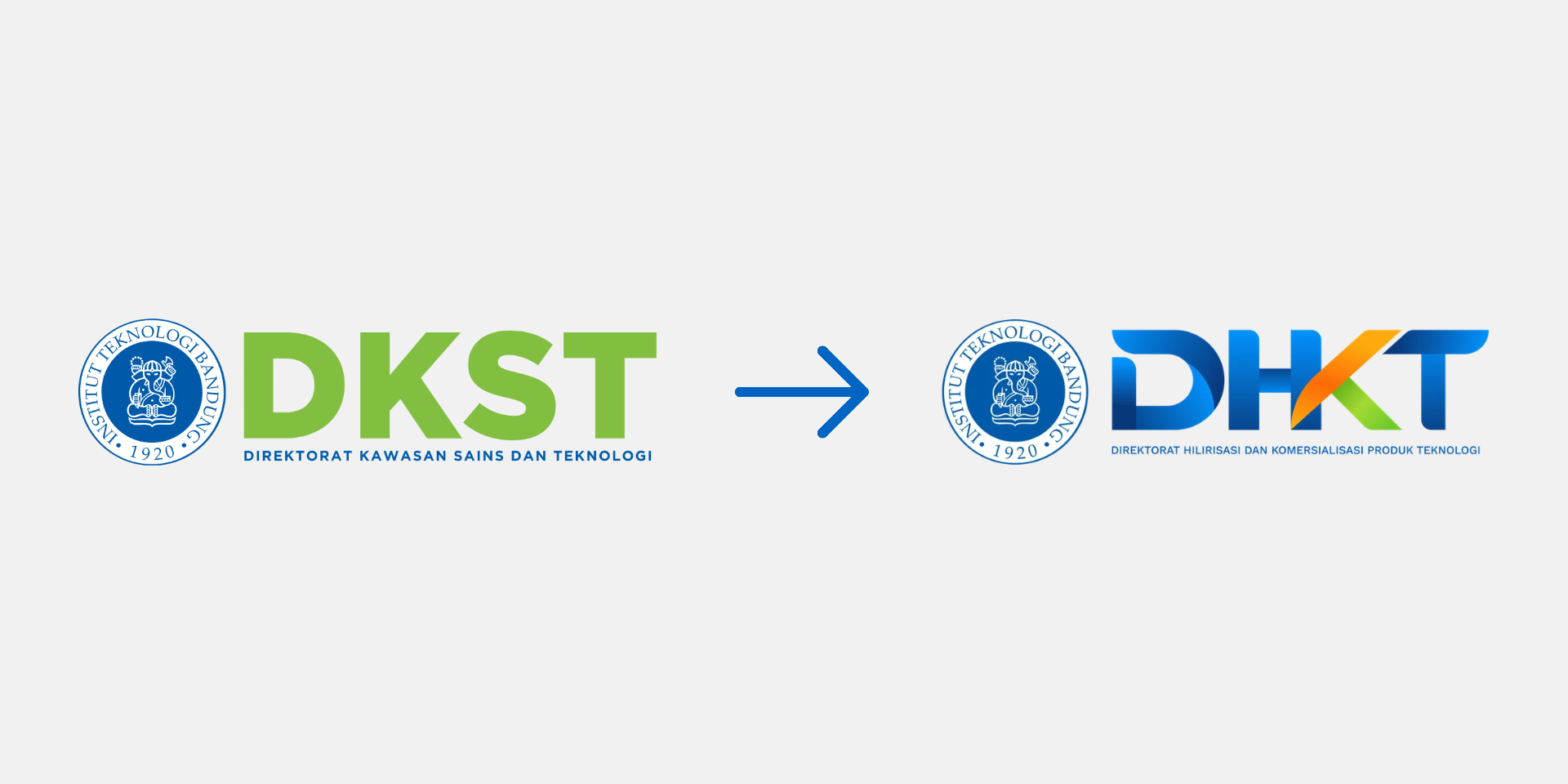
BANDUNG, dhkt.itb.ac.id – Institut Teknologi Bandung (ITB) has officially introduced a structural transformation of its campus innovation ecosystem. The Directorate of Science and Technology Parks (DKST) has institutionally evolved into the Directorate of Downstreaming and Commercialization of Technological Products (DHKT / Directorate of Downstreaming and Technology Commercialization) at ITB.
This strategic step marks a new chapter in the long evolution of ITB’s innovation ecosystem. Its institutional development began with the establishment of the Intellectual Property Management Office in 2001 and the Business Incubator Center in 2003, followed by their merger into the Institute for Innovation and Entrepreneurship Development (LPIK) in 2010. The ecosystem continued to grow with the opening of ITB Innovation Park Ganesha in 2022 and its transformation into DKST in 2024, culminating in the establishment of DHKT ITB in 2026.
Under its new organizational framework, DHKT ITB serves as a strategic enabler and catalyst for innovation. Its main mandate is to ensure that research ideas and academic discoveries—particularly products at Technology Readiness Levels (TRL) 7 to 9—advance beyond laboratory testing. These leading innovations are supported in obtaining legal intellectual property protection, being developed into practical products, and being commercialized for industrial markets.
To achieve these goals, DHKT ITB operates through three main functional pillars. The first, Business Incubation and Acceleration, supports participating startups from prototype validation through to investor readiness. The second, Area Business Development, focuses on asset management and business acceleration activities at ITB Innovation Park Ganesha, as well as preparations for operating the integrated Bandung Technopolis science park in Summarecon. The third, Technology Transfer, connects inventors with corporations and facilitates intellectual property protection services in collaboration with relevant agencies.
With the establishment of DHKT ITB and its full organizational structure under the Vice Rector for Research and Innovation, this higher education ecosystem is expected to accelerate the creation of independently developed technological products. The institution aims to increase the number of academic research projects that successfully become commercially valuable solutions, thereby contributing directly and sustainably to national economic growth and technological self-reliance.