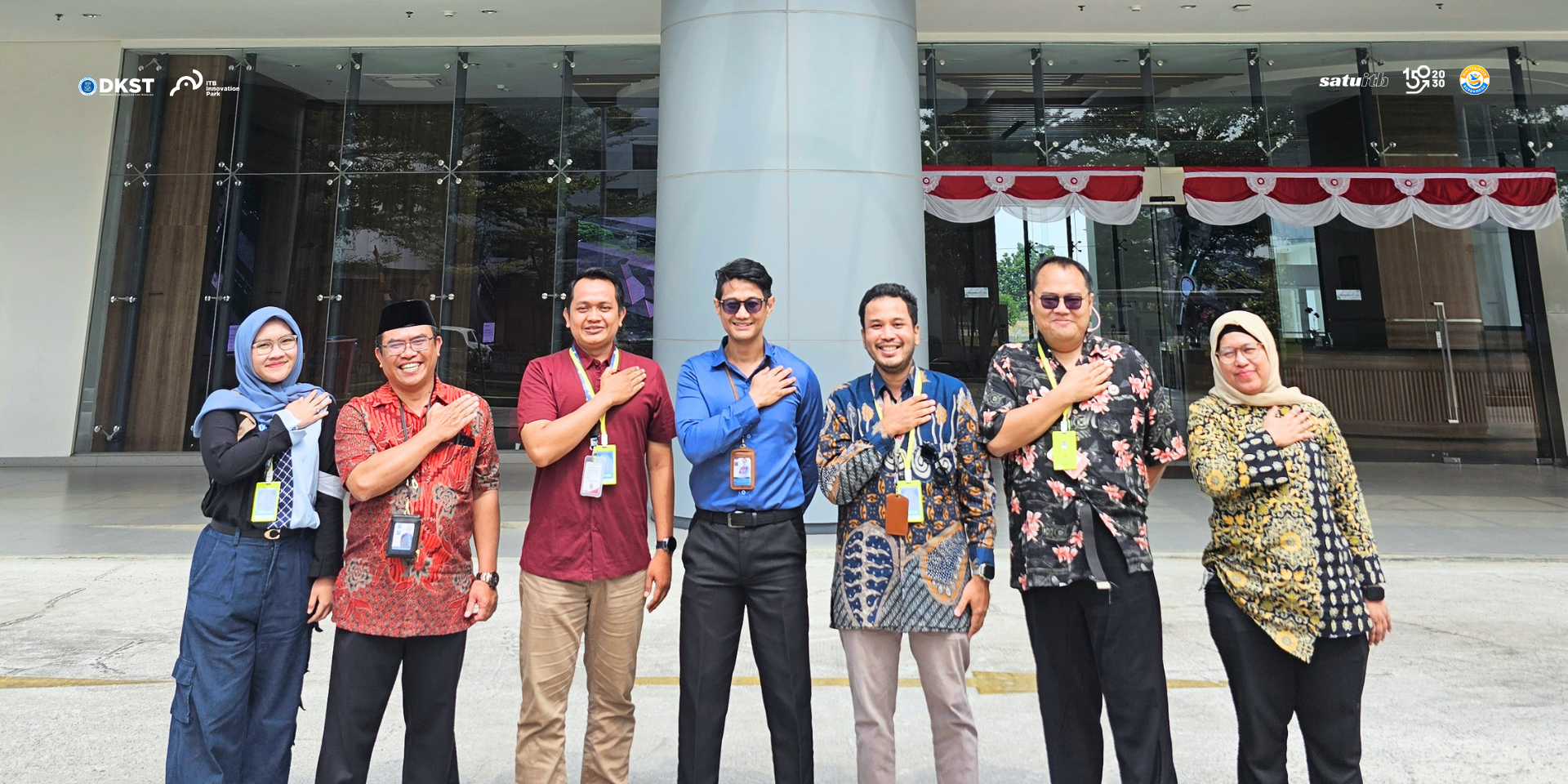
BANDUNG, dkst.itb.ac.id – Strengthening the downstreaming of research outcomes was one of the key topics discussed during a visit by the Research Team of the Center for Public Policy Research (PRKP), National Research and Innovation Agency (BRIN), to the Directorate of Science and Technology Area (DKST) at Institut Teknologi Bandung (ITB) on Wednesday, 19 August 2026, at the 9th Floor of ITB Innovation Park Bandung Technopolis.
The visit formed part of the study entitled “The Institutional Model of Indonesia’s Innovation House for Improving Research Downstreaming Services.” The research team explored DKST ITB’s experience and perspectives on downstreaming challenges, the role of intermediary organizations, and an institutional model for the Indonesia Innovation House (RII) that can bridge research outcomes and industry needs.
On the occasion, ITB Director of Science and Technology Area, Ir. Hary Devianto, S.T., M.Eng., Ph.D., IPM, ASEAN Eng., explained that one of the challenges of research downstreaming in Indonesia is the still limited use of research outcomes by industry. Industry generally requires products that are ready for use and commercialization, while some university research outcomes still need further development and refinement.
Trust between universities and industry is essential to this process. Research outcomes need to respond to the real needs and challenges faced by industry. In this context, intermediary organizations can connect both parties while helping ensure that innovation development remains aligned with industry needs.
Hary also highlighted regulations as an ongoing challenge in downstreaming. Complex licensing processes and various regulatory requirements can affect the implementation of innovations in the field. Industry involvement is equally important, particularly because industry has greater experience and understanding of the needs and regulatory aspects involved in applying innovation.
From an institutional perspective, DKST ITB views a legal entity as one possible form to support RII in carrying out its role more flexibly, while continuing to observe applicable provisions and governance. This should be supported by inter-unit connectivity and a clear division of roles and authority.
ITB’s experience in building a downstreaming ecosystem was also part of the discussion. The commercialization of ITB research outcomes is supported by various units with distinct yet interconnected functions, ranging from identifying innovation potential and managing intellectual property to developing business models, incubating technologies, and building partnerships with industry.
According to DKST ITB, research downstreaming and commercialization cannot rely on a single unit or platform. The process involves a range of functions and expertise, requiring clear collaboration mechanisms so that each party can perform its role in an integrated manner.
DKST ITB’s input is expected to enrich the development of RII’s institutional model, particularly in building intermediary organizations that can bridge research outcomes and industry needs more effectively, adaptively, and accountably.