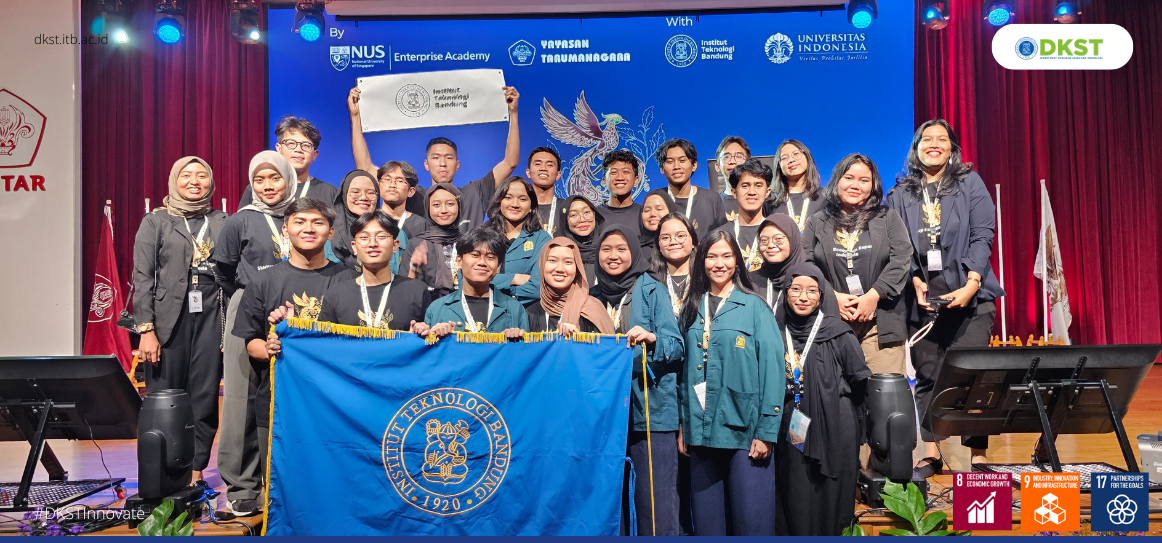
Bandung, DKST ITB – NUS Enterprise is again presenting their annual winter period program with a different format. This year, Startup Ecosystem Exposure (SEE) 2025 for the first time held in Indonesia as part of a derivative of the Indonesia-Singapore MoU. By collaborating with the Tarumanagara Foundation as the main host and ITB and the University of Indonesia as academic partners, SEE 2025 is a forum for students to explore the startup ecosystem in Indonesia.
This program aims to strengthen relationships and collaboration between startups in the two countries by providing participants with direct insight into the challenges and opportunities in the startup business world. For eight full days, 201 students from various universities in Indonesia and NUS were provided with practical experience, ranging from case studies, visits to business ecosystems, to presentations of business solutions in front of the judges.
The first day began with an orientation and challenge session ice-breaking which is unique, namely making a typical Indonesian dish, ketoprak. This activity aims to increase interaction and build a spirit of cooperation between participants. Next, participants were given business challenges through two main case studies originating from Metland and RaiSE. They are challenged to develop applicable and innovative business solutions.
On the second and third days, participants explored the business ecosystem through visits to Metland Indonesia as well as special classes about design thinking And effective presentation. With this provision, they prepare business ideas and solutions to the challenges that have been given.
From Jakarta to Bandung: Exploration of Startup Ecosystems and Technological Innovation
On the fourth day, participants departed from Jakarta to Bandung using Whoosh, Indonesia's newest high-speed train. Their arrival at ITB was greeted with a panel discussion entitled “Start from Small to Bigger Dream”. This discussion presents business and industry experts who discuss how businesses that started from retail can develop into a larger ecosystem. This session was guided by Della Yunia Hogiana as moderator.
After the panel session, participants were invited to get to know local culture through performances at Saung Angklung Udjo, providing international participants with deeper insight into Indonesia's cultural heritage.
The fifth day was filled with activities team bonding in Kebon Pines, Lembang, and dinner at the Bandoengsche Melk Centrale 1928 restaurant. This activity further strengthens relationships between participants through relaxed interactions in a typical old Bandung atmosphere.
On the last day in Bandung, participants visited two ecosystem startups in Bandung. Some participants visited the Bobobox office, startup unicorns from Bandung, while others came to Block71 Bandung, as representatives of the incubator entity. After lunch, all participants returned to Jakarta to attend a mentoring session and refine their business solutions.
SEE Summit 2025: Presentation, Awards, and Program Impact
After going through various activities and learning, SEE 2025 reached its peak with a session presenting participants' business solutions. A total of 40 teams presented their ideas in front of a jury consisting of academics, industry practitioners and case study owners. Each room features 20 teams with around 10 judges who provide evaluations of the solutions that have been developed.
At the closing ceremony, Prof. Tan Eng Chye (President NUS) and Assoc. Prof. Dr. Ariawan Gunadi, S.H., M.H. (Chair of the Tarumanagara Foundation) gave a speech and handed over awards to the best teams. Some of the award categories given were Best Idea for the three best case study solutions, Best Pitch, and Best Participant.
ITB recorded an achievement with the team led by Kireyna winning Best Solution Metland, taking home a prize of SGD 1 million. Meanwhile, Annisa Sania Mahira and Hayfa Felicia and their team won the Best Pitch award, and Kireyna was also named one of the Best Participants in this program.
SEE 2025 is proof that collaboration between Indonesia and Singapore in startup development can have a big impact on students and industry. It is hoped that this program will continue to develop and become a forum for young innovators in creating innovative and sustainable business solutions.