
Transformation toward a more sustainable construction industry is no longer only about energy efficiency during building operation. Attention is increasingly turning to the carbon footprint created throughout a building’s life cycle—from raw-material selection, manufacturing, and transport to construction and end-of-life. This shift is driving low-carbon materials, renewable resources, circular design, and construction systems that allow components to be reused.
Within this context, BIONEST-LITE (Biomass-Integrated Lightweight-Core Engineered System for Low-Carbon Modular Housing) offers a compelling approach: converting biomass waste into part of a low-carbon modular prefabricated housing system.
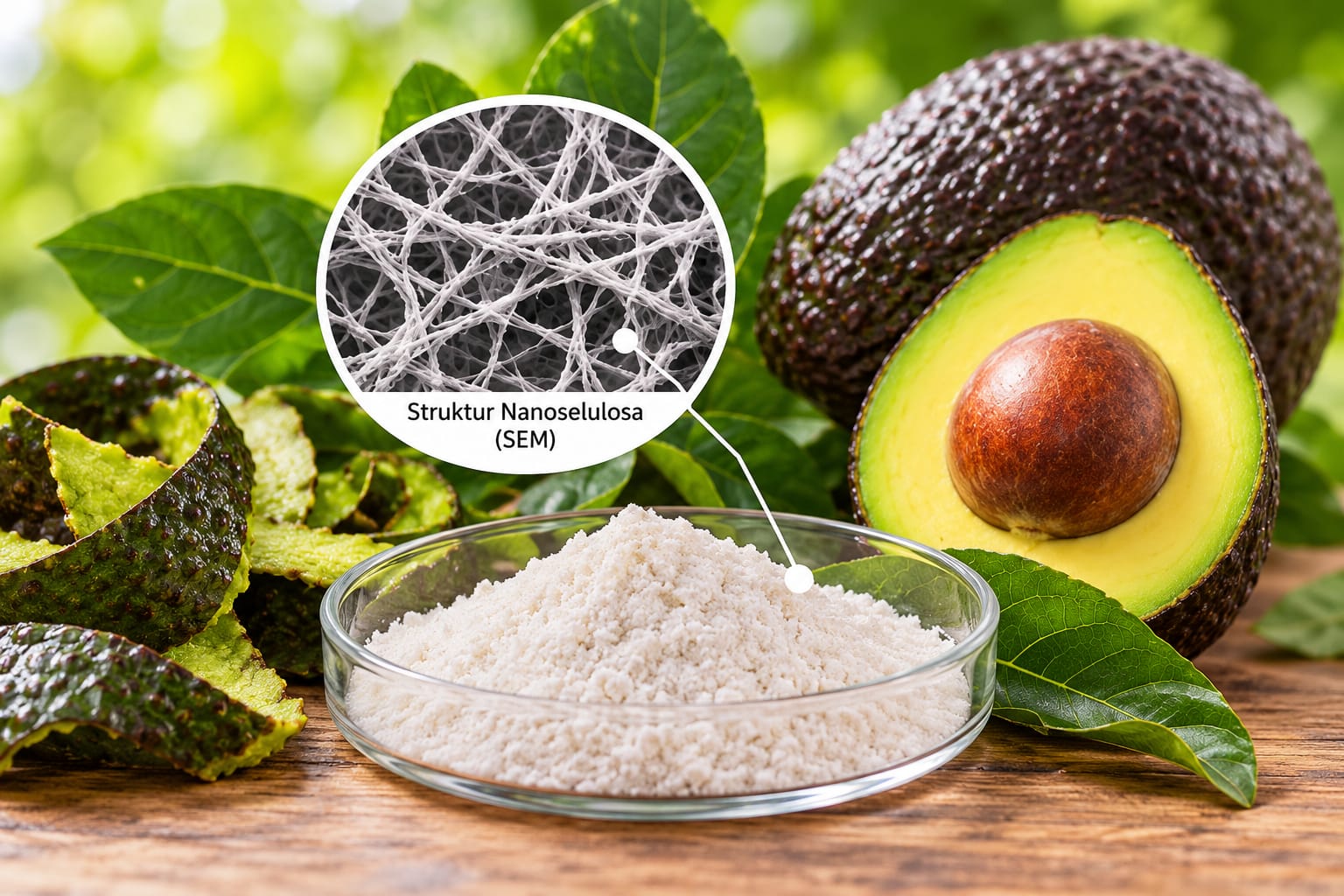
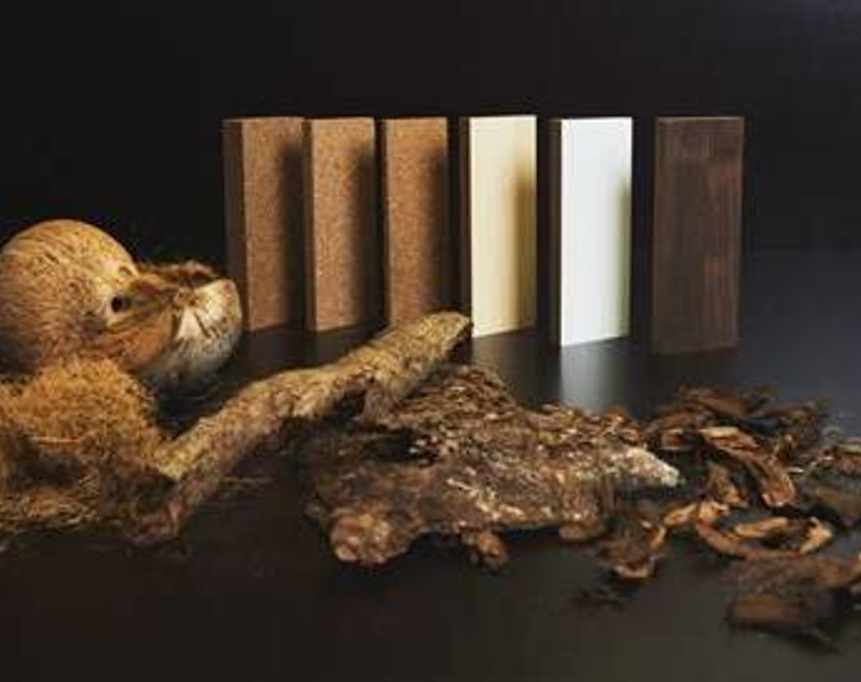
Indonesia has abundant biomass resources, including empty palm-oil fruit bunches, coconut coir, and wood residues. BIONEST-LITE treats these materials not merely as waste, but as potential resources for a new generation of construction materials. Biomass is used as the core of engineered wood-composite panels for building elements such as walls, floors, and roofs.
The strength of BIONEST-LITE lies in its system innovation approach. The work does not stop at creating a biomass material: each panel is designed as part of an integrated building system comprising modular frames, wall panels, floors, roofs, and opening components. The panels use a layered structure, with plywood faces on both sides and a biomass core in the middle. This approach creates opportunities to replace part of the higher embodied-carbon material with biomass-based resources.
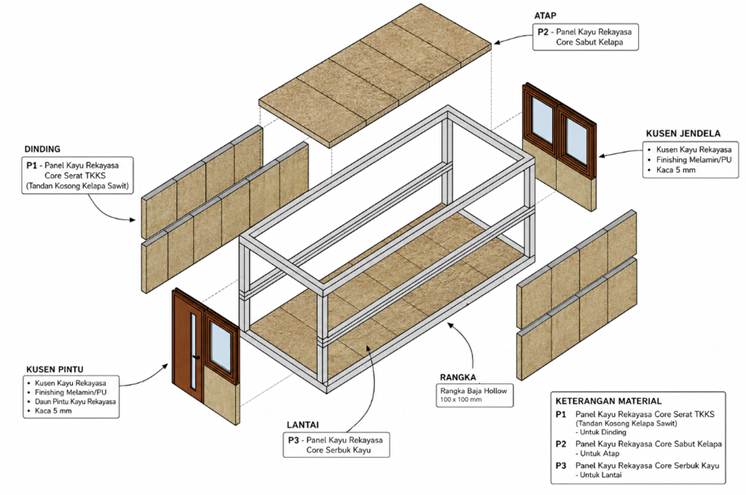
The concept is supported by prefabrication and foldable design. Units can be transported in a flat-pack configuration, then opened through a frame-and-hinge mechanism, locked, and completed with panels to form a usable space. This design can improve logistics efficiency and accelerate on-site installation.
Its development also connects material experiments with digital technology. Panel-test data are used for simulation, evaluation, and optimization of the connection system before it is applied to physical prototypes. BIONEST-LITE targets a reduction in embodied carbon of around 20–30 percent compared with conventional construction systems of equivalent function. This remains a development target that requires continued testing and validation.
BIONEST-LITE represents an important transition in sustainable material innovation: moving beyond the search for “green materials” toward circular systems. Local biomass becomes a value-added resource; prefabrication improves production efficiency; modular design supports adaptability; and the ability to dismantle and reuse components extends the resource life cycle.
Through this approach, BIONEST-LITE creates a new link between two Indonesian strengths: biomass availability and the need for housing development. The next challenge is to validate the system at real scale, prepare manufacturing capability, and develop implementation models that enable biomass-based materials to become part of Indonesia’s low-carbon construction industry.
Technology and data source: Dewi Larasati and team, Building Technology Expertise Group, SAPPK ITB / Center for Sustainable and Resilient Built Environment (CSR-Be), ITB.