
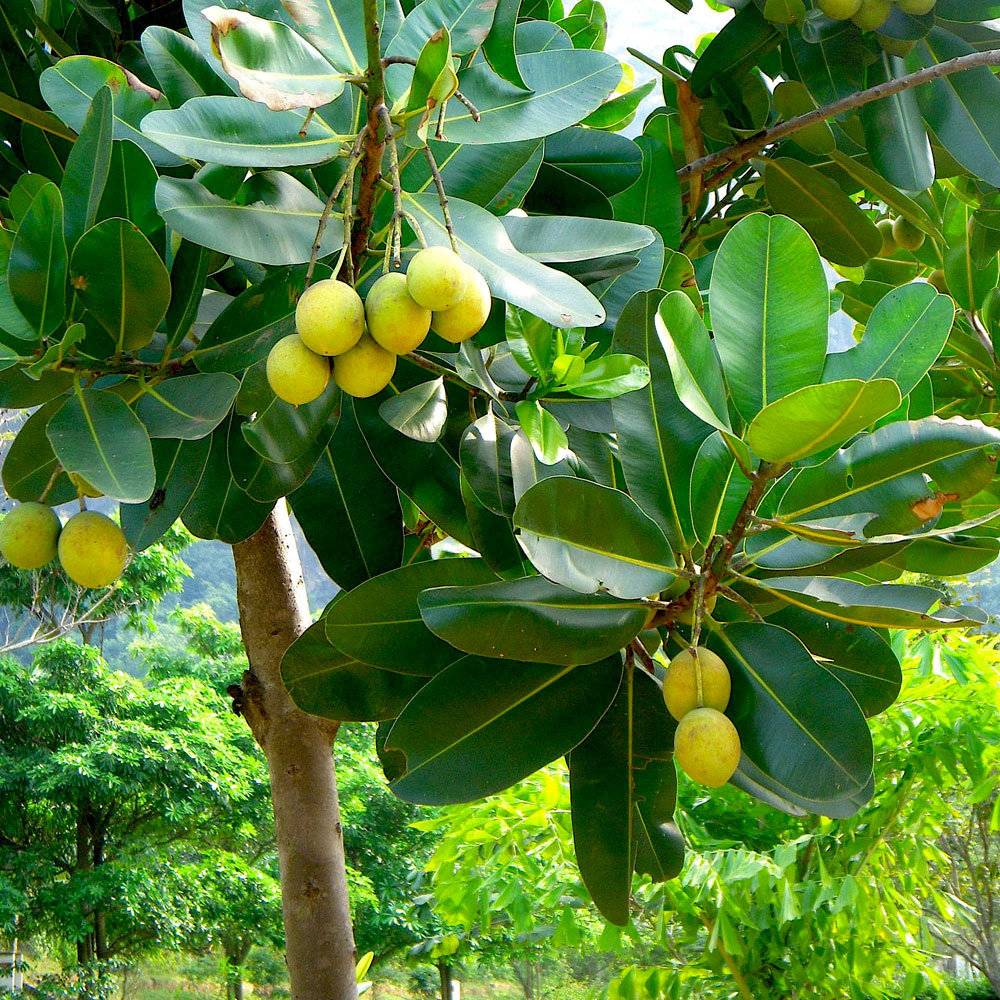
Indonesia has a biidic wealth that holds great potential for the development of natural-based cosmetic industries. One of them is a cuddle, a tropical plant that grows across the coast of Indonesia. Over the years, beanstalk oil or tamanu oil has been known as a natural ingredient used in traditional skin care.
However, the potentials of dilation don't stop at the oil. The content of the bioactive compound inside opens the possibility of developing active cosmetic materials with higher value.
Through the innovation of Tamanu Polyphenol (TNG6-1000), EBM Sciitech developed the standard active material of the Indonesian waste to support the science-based cosmetic industry.
Why is Tamanu attractive to Cosmetics Industries?
The tamanu oil contains various bioactive compounds, including polyfenol, flavonoid, kumarin, and typical compounds like calophilolide. The combination of these compounds attracts researchers because of the potential antioxidants, antibacterial and antiinflammatory activity.
Léguillier research and colleagues (2015), published in PLOS One, suggests that taxical oil from some areas, including Indonesia, has antibacterial activity and supports the process of closing the wounds on human skin testing in labs.
Another study published in Planta Medica (2016) found that tamanu oil emulsions can support skin cell proliferation and collagen production and glycosminoglioxy in human cell research models. It strengthens the potentials as a material for developing skin care products.
The leading innovation of EBM Sciitech was in an attempt to develop Tamanu Polyphenol as a standard bioactive fraction, rather than simply exploiting conventional sweeps.
Based on information presented by EBM Sciitech in INNOVIBES, this innovation was developed with some of the main characteristics:
♪ Rich bioactive compound: Containing more polyfenol and flavonoid fractionsconcentrated.
Antibacterial activity: It's reported to have 4-5 times higher activity thanvirgin tamanu oil to bacteria cause acne.
♪ Multiactivity for the skin: Potentially supporting antioxidant protection, activityantiinflammatory, as well as skin care.
♪ Standard active materials: Designed to help industry generate formulationcosmetic with more consistent quality and bioactivity.
♪ Claim the increase in antibacterial activity was a yield byinnovation developers and still require method information and testing publicationsfor independent verification.
Application Opportunity in Cosmetics Industries
Tamanu Polyphenol is potentially developed as an active material for various categories of products, among other antiacne skincare, solun and antiinflammatory care, antiaging, blemish and scar care, as well as dermacosmetic.
This potential also supported research on tamanu oil nanoemulation formulation published in the Pharmacia journal (2025). The study showed the inhibition activity of Cutibacterium acnes and Staphylococcus epidermidis, two bacteria associated with acne issues.
Nevertheless, most scientific evidence is still derived from lab research. The testing of security, stability formulation, and effectiveness in humans is necessary before the benefits can be claimed on commercial cosmetic products.
Create Add Value of Biodiodic Indonesia
Tamanu Polyphenol's innovation shows the possibility of transforming Indonesian natural resources into an active material industry that has higher economic value.
Through the mastery of extraction technology, characterization of compounds, standardization, and development of formulation, EBM Sciech opens up the possibility of collaboration with the national cosmetic industry to produce the biodioactive products.
For DHKT ITB, this innovation reflects how technology's research and development can be a bridge between natural wealth, scientific excellence and industrial need.
Tamanu Polyphenol is not just the innovation of cosmetic materials, it's an example of how biodiosaic Indonesia can be transformed into a product based on knowledge and competitive technology.